Intelligence brief — reading the 7 sections
An intelligence brief is a structured read of how a winning post is trying to work. You open a post, press Generate intelligence brief, and after a minute or two the window swaps to a reader with seven sections.
There's nothing to fill in and no setup. The AI reads the post directly — its media, or a text post's words, with the linked page's preview picture when a link post has one.
It isn't offered on a video over the 10-minute AI-analysis limit, on a video the AI can't read, or on a text post whose text and picture weren't collected — see the three on-demand analyses.
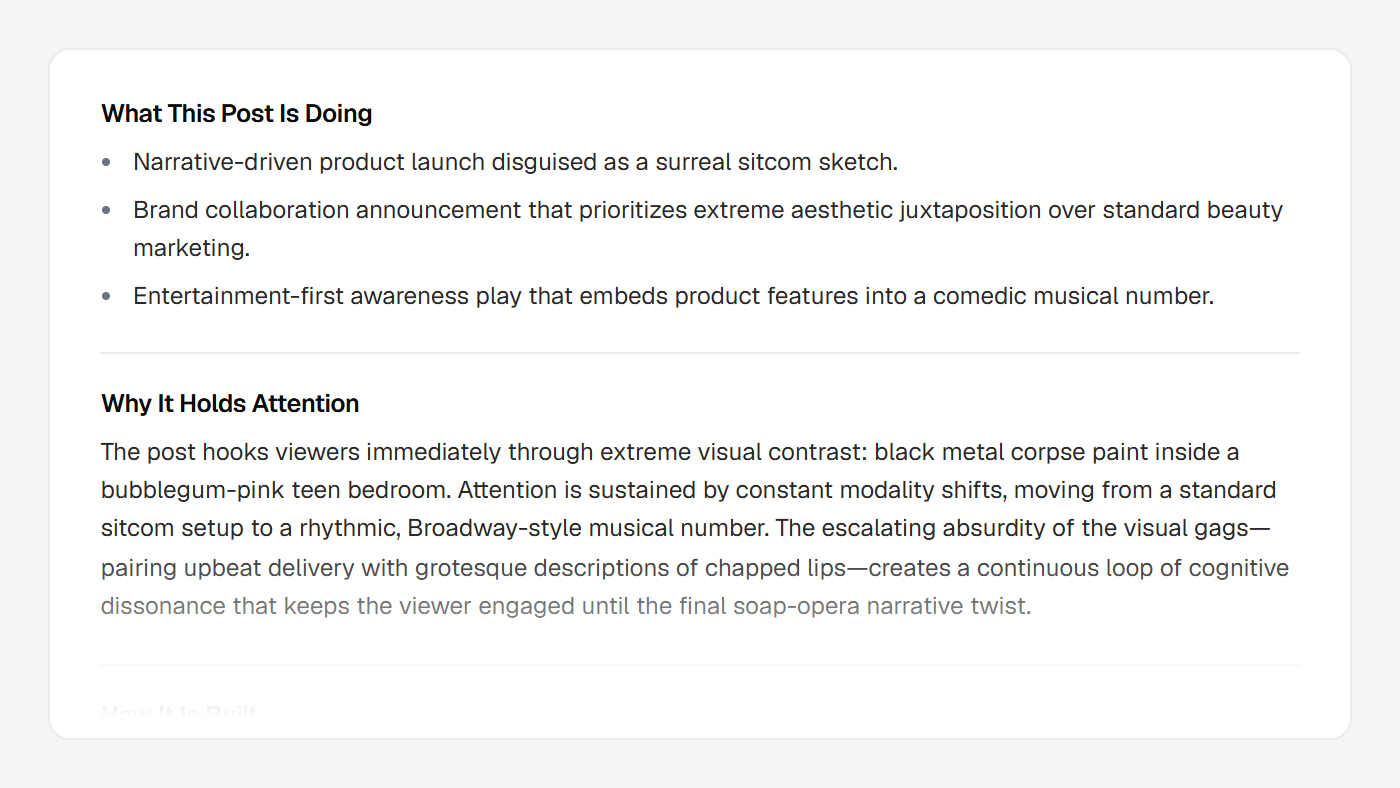
The seven sections, in order
The reader always carries these seven, in this fixed order, under their Romanian names when it's run in Romanian:
- What This Post Is Doing — the strategic job the post plays.
- Why It Holds Attention — what keeps people watching.
- How It Is Built — how the post is put together, from format to where the call-to-action sits.
- Hidden Mechanics — the choices that work without being obvious.
- What Looks Reusable — the moves you can carry to other content: the pattern, not the specific scene.
- Fragile Dependencies — what may not transfer: parts locked to this creator, this production, this cultural reference.
- Idea Sparks — a few ways to take a reusable move somewhere new.
How to use it
The brief deconstructs the source; your team brings the brand, however you prefer.
If you've connected Huntit to Claude, it can read the Brief and turn its reusable moves into scripts in your brand's voice.
By design it never calls a post trending or viral, and never predicts that it will succeed. The Brief has no performance data on the analyzed post, so it sticks to what it can observe and leaves the verdict to you. See the ground rules.
To run it again, press Regenerate in the reader's header. The new run replaces the one on screen — see running an analysis.