Intelligence brief — reading the 7 sections
An intelligence brief is a structured read of how a winning post is trying to work. You open a post, press Generate intelligence brief, and after a minute or two the modal swaps to a reader with seven sections.
There's nothing to fill in and no setup. One click, and the AI watches the post's media directly to produce the read. It deconstructs the source; your team brings the brand.
The one post it isn't offered on is a video over the 5-minute AI-analysis limit — see the three on-demand analyses.
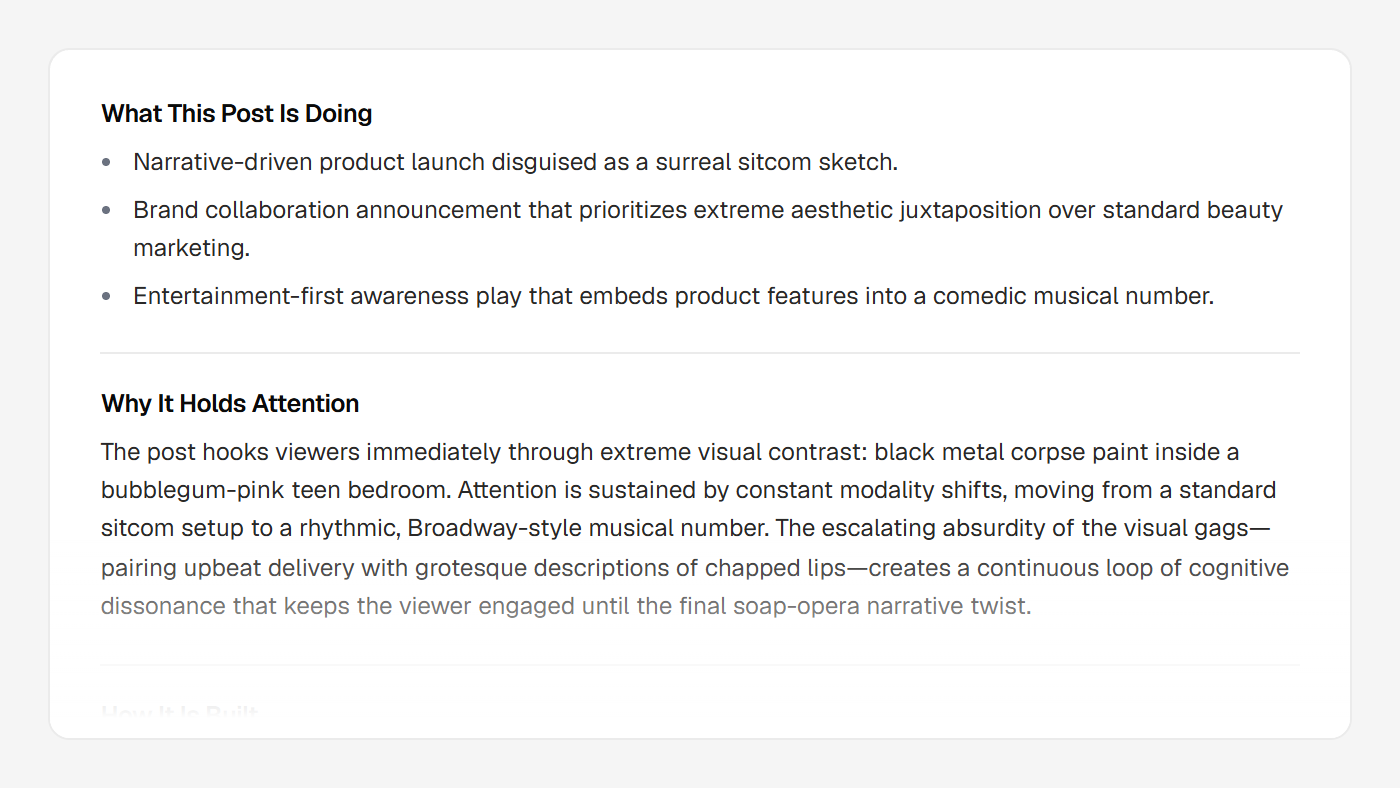
The seven sections, in order
The reader always carries these seven, in this fixed order:
- What This Post Is Doing — the strategic job the post plays: the role it fills, not the hook device or the edit details.
- Why It Holds Attention — the obvious attention logic on first watch: the hook, the pacing, the tension, the payoff timing.
- How It Is Built — the visible assembly: format, sequencing, edit rhythm, where proof and the call-to-action sit.
- Hidden Mechanics — the non-obvious choices working beneath the surface (withholding a reveal until proof is earned, using roughness to signal authenticity). Every point traces to something visible in the post.
- What Looks Reusable — the portable moves, phrased so you can carry them to other content — the pattern, not "show the founder in the warehouse."
- Fragile Dependencies — what may not transfer: parts locked to this creator, this production, this cultural reference.
- Idea Sparks — two or three ways to extend a reusable move into a different expression. Each one names the move it inherits.
How to use it
The Brief describes the source. It does not adapt the post to your client — that is your team's work, done however you prefer. The Brief hands you the deconstruction; you bring the brand.
If you've connected Huntit to Claude, it can read the Brief and turn its reusable moves into scripts in your client's voice.
By design it never claims a post is "trending" or "viral", and never predicts that it will succeed. Huntit holds no performance data on the analyzed post, so the Brief sticks to what it can observe — a post uses, or frames, or withholds — and leaves the verdict to you. See the ground rules.
Regenerate lives in the reader's header. A new run replaces the one on screen — only the latest Brief shows; see regenerate, re-run, and "latest only".